Roof Repair vs. Full Replacement in Houston: How to Know Which One Your Home Actually Needs
June 20, 2026
You notice a water stain spreading across your ceiling after the last round of storms rolled through Houston. You get up in the attic with a flashlight, spot a few wet spots near the ridge, and now you are standing in your driveway staring at your roof wondering whether a patch job is going to hold or whether you are looking at a full teardown. That is the decision most Houston homeowners face after storm season, and it is the one that costs the most when made incorrectly. The answer depends on more than how bad the damage looks from the ground. It depends on your roof's age, the material condition underneath the shingles, how Houston's specific climate has been working against it, and whether the underlying deck has already been compromised.
Getting this decision right the first time matters because a repair applied to a roof that needed replacement will fail within one to two seasons. On the other hand, replacing a roof that had three to five good years left is an unnecessary expense most homeowners cannot absorb all at once.
The First Signs That Tell You Which Direction You Are Heading
Most roofs do not fail all at once. They send signals for months before a leak shows up on the ceiling. Knowing what those signals mean will save you from either underreacting or overspending.
Shingle Condition Is Your First Indicator
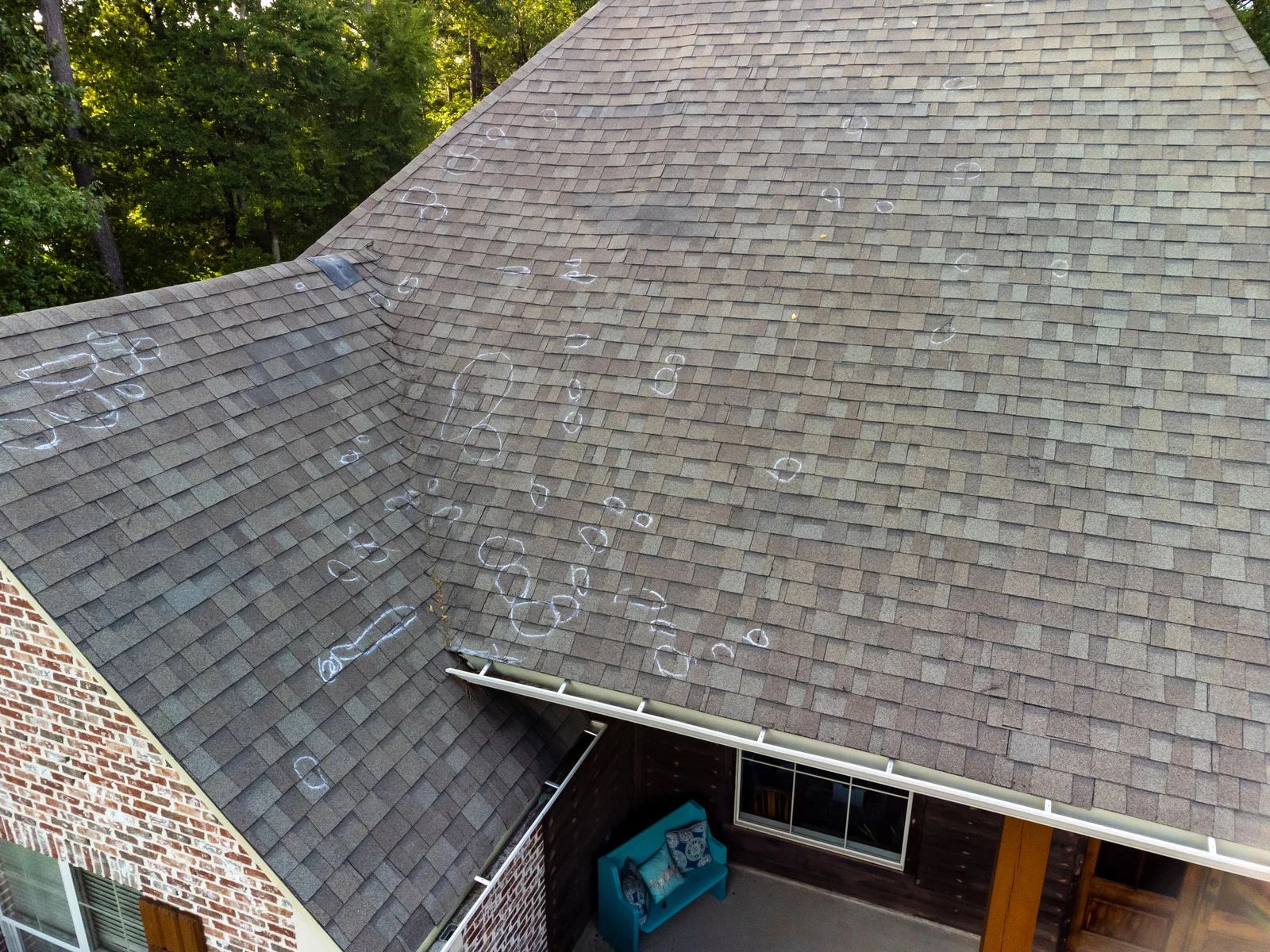
Walk the perimeter of your home after a dry day and look at the gutters. If you see granules collecting in the downspout discharge area, your shingles are shedding their UV protective coating. Light granule loss is normal after year seven or eight. Heavy granule loss before year 12 on a 30-year shingle points to either a manufacturing issue or heat damage from Houston's prolonged summers, where surface temperatures on dark shingles routinely reach 150 to 160 degrees Fahrenheit.
Flashing Failures Are Almost Always Repairable
When leaks originate around chimneys, skylights, or roof-to-wall transitions, the shingles themselves are usually not the problem. Step flashing that has lifted, corroded, or was improperly installed in the first place can be replaced as a standalone repair without touching the field shingles at all. We find this on roughly 30 to 35 percent of service calls where the homeowner assumed a full replacement was needed.
Sagging Sections Change The Calculation Entirely
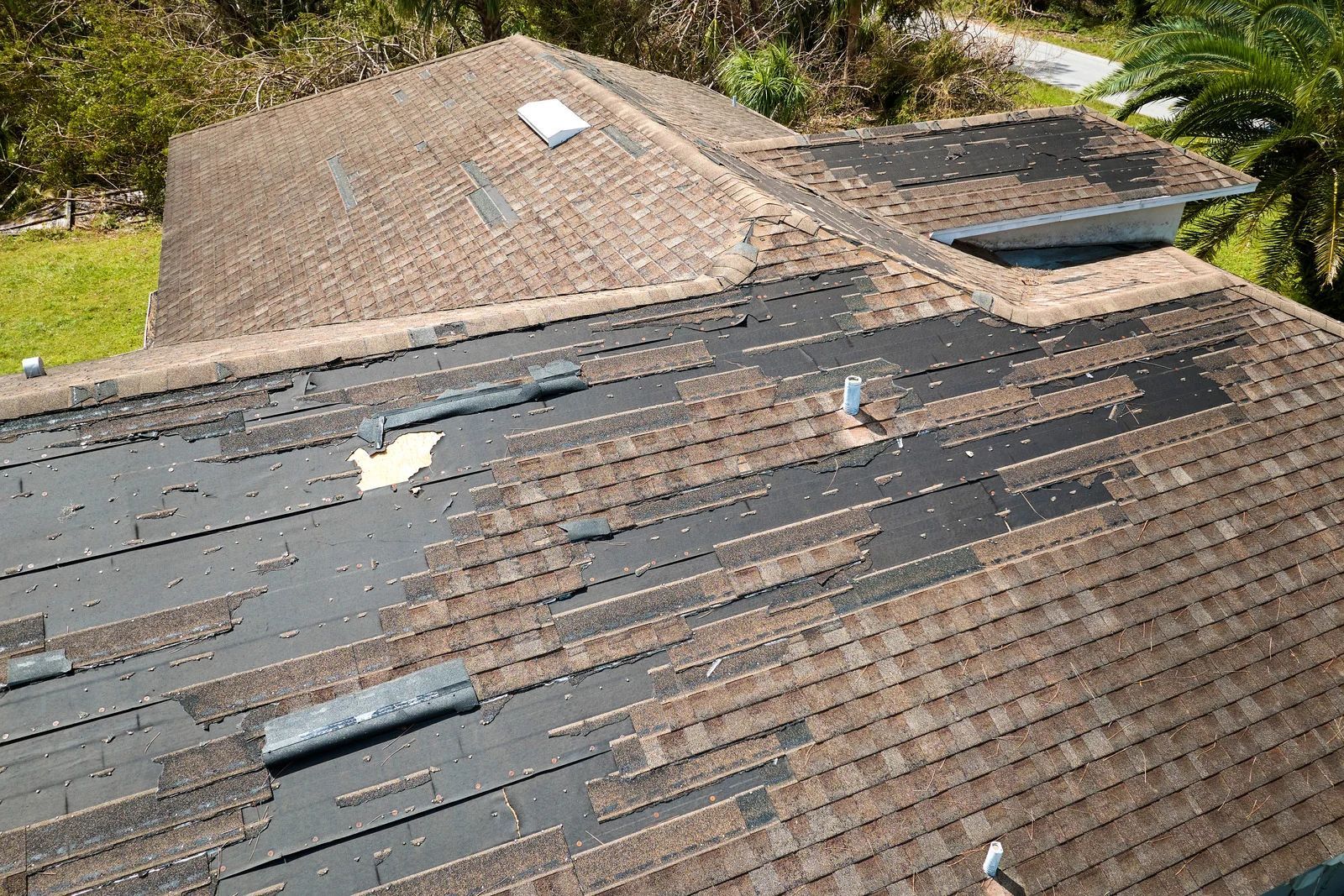
Any area where the roof plane dips, sags, or feels spongy underfoot is not a shingle problem. That is a decking problem, and it means moisture has been sitting on the structural layer long enough to cause rot. A repair over compromised decking will not hold. The deck has to be replaced before anything else gets installed over it.
TIP: Before calling anyone, go into your attic during daylight with the lights off. If you see daylight coming through the roof deck at any point, that is a structural penetration and water is already getting in through a path that a surface repair cannot address.
WARNING: If your attic shows signs of active mold growth covering more than a few square feet, do not spend extended time up there. Mold in attic spaces in Houston's humidity can be concentrated. Get a professional inspection before entering again and mention the mold specifically when you call.
What Age Actually Means for This Decision
A roof's age is the most reliable single factor in the repair-versus-replace decision, but only when you know what the age means relative to the material.
A three-tab asphalt shingle roof in Houston typically reaches functional end of life between 15 and 18 years, not the 20 to 25 years listed on the packaging. That gap exists because the manufacturer's rating is based on moderate-climate testing. Houston adds about 20 to 25 percent more thermal cycling than the national average, which accelerates the oxidation of the asphalt binder in the shingles. Architectural shingles handle this better, with realistic lifespans of 22 to 27 years in Houston conditions.
If your roof is under 10 years old and the damage is isolated to one slope or a specific penetration point, repair is almost always the right call. If your roof is between 10 and 15 years old, the repair decision depends on the condition of the remaining shingles across the whole surface, not just the damaged section. If it is past 15 years and you are having your second or third repair, you are approaching the point where each repair is borrowing time on a system that is already in overall decline.
Commercial moves in Appleton, Neenah, Oshkosh, and Fond du Lac face a seasonal constraint that businesses relocating in warmer markets simply do not deal with. Winter moves between November and March introduce genuine logistical risk: loading dock access with ice and snow accumulation, elevator lobbies that require floor protection against tracked-in moisture, and temperature-sensitive electronics that need to be acclimated before powering up.
The Fox Cities business community is also highly concentrated in certain commercial corridors, which means that popular move windows get booked out 8 to 12 weeks in advance, particularly in late spring and early fall when lease cycles cluster. Businesses that decide to move and start planning with a 3 to 4 week runway frequently discover that their preferred dates are unavailable and end up moving during suboptimal conditions or extending their current lease at significant per-diem expense.
Repair vs. Replacement: Side-by-Side Comparison
| Factor | Repair | Full Replacement |
|---|---|---|
| Upfront investment | Lower | Higher |
| Lifespan after work | 2 to 7 years depending on overall roof age | 20 to 27 years with new architectural shingles |
| Best for | Isolated damage, roofs under 12 years, flashing failures | Roofs over 15 years, widespread granule loss, deck damage, repeated leaks |
| Insurance claim alignment | Works for localized storm damage | Required when storm damage is widespread or total |
| Risk of hidden damage | Moderate — existing issues may be masked | Low — full inspection and deck replacement possible |
| Houston heat performance | Existing material continues degrading | New material with current solar-reflective ratings |
How We Inspect Before Recommending Either Option
A proper inspection does not start at the shingles. It starts in the attic. We check for daylight penetrations, moisture staining on the underside of the deck, insulation condition, and ventilation adequacy before stepping foot on the roof surface.
On the roof, we look at granule adhesion across all slopes, not just the reported problem area. We probe the deck through any soft or damaged shingles. We check every piece of flashing, every penetration boot, and every valley. We look at the ridge cap condition and the starter course at the eaves.
On service calls in Houston, we frequently find that the reported leak is coming from one location but secondary moisture entry points exist elsewhere on the same roof. A repair that addresses only the reported location leaves those secondary points active. That is why a full-surface inspection is non-negotiable before quoting either option.
Common Mistakes That Cost Houston Homeowners More Long-Term
- Repairing From Above Without Checking The Deck:- Contractors who quote a repair without pulling back several shingles to probe the deck are guessing. A new layer of shingles over rotted decking will feel loose within one season and fail entirely within two.
- Waiting For A Second Opinion That Never Happens:- Many homeowners get an inspection, receive a replacement recommendation, and delay the decision, hoping the leak stays manageable. In Houston's climate, a known entry point that goes unaddressed through a summer and a storm season typically results in mold in the attic insulation, which adds an entirely separate remediation scope to the project.
- Choosing Repair On A Roof Over 18 Years Old To Save Money Short Term:- A repair on a roof at or past functional end of life is not a savings. It is a down payment on a larger failure. The repair cost gets absorbed by the eventual replacement without extending the system's life in any meaningful way.
Our Inspections Go Deeper Than the Surface Every Time
The repair-versus-replace decision comes down to age, damage scope, and deck condition, and none of those three can be assessed from the ground. In Houston, where heat, humidity, and storm cycles combine to age roofing systems faster than most markets, waiting on a known problem typically escalates both the scope and the price of the eventual fix.
At Sunlite Exteriors, we have been inspecting and replacing roofs across the Houston area for 45
years. We serve homeowners throughout Houston, Texas. Every inspection includes a full attic check and deck assessment before we recommend either option. If a repair is what your roof needs, that is what we will tell you.
Frequently Asked Questions
How do I know if my roof damage will be covered by insurance in Houston?
Insurance in Houston typically covers sudden storm damage, not gradual wear. Photograph damage immediately after any storm and note the date. Adjusters look for hail impact patterns or wind-related failures. A reputable contractor can identify which portions of the repair scope qualify before you file.
Can I repair only part of a roof and leave the rest?
Yes, if the undamaged sections have enough remaining life to justify the investment. Mismatched shingles are cosmetic, not functional. The real concern is age. If untouched sections are within three to four years of the end of life, a partial repair will likely be followed by full replacement soon.
What is the typical lifespan of a new roof installed in Houston?
Architectural asphalt shingles last 22 to 27 years in Houston when installed correctly. Metal roofing systems last 40 to 50 years and handle thermal expansion better in prolonged heat. Proper attic ventilation adds 3 to 5 years to either material by reducing heat buildup under the deck.
Is it safe to stay in the house during a roof replacement?
For most replacements, yes. Expect significant noise and vibration during tear-off and nailing, but no structural risk to occupants. If active attic mold was found during inspection, discuss remediation timing before re-occupancy. Schedule work during a dry forecast stretch since open deck sections are temporarily exposed.
How do I tell if a Houston contractor is recommending replacement when a repair would do?
Ask what they found during the attic inspection and when they probed the deck. A valid replacement recommendation requires documented deck damage, widespread granule loss, or age-based photographic evidence. Any contractor quoting replacement without entering the attic or probing the deck warrants a second opinion before you commit.