Hail Damage Signs Your Roof Won't Show You Right Away
September 16, 2026

Quick Answer: Hail damage on a roof rarely looks dramatic from the driveway. Check gutters and downspouts for granule buildup, look at vent caps and flashing for small dents, and watch for cracked or missing shingles and damaged skylights. Texas leads the nation in hail events most years, and Houston's heat and humidity turn even minor hail bruising into granule loss and leaks faster than drier climates do. A shingle that looks fine after a storm can still have a fractured mat underneath, which is why a ground-level look only tells part of the story.
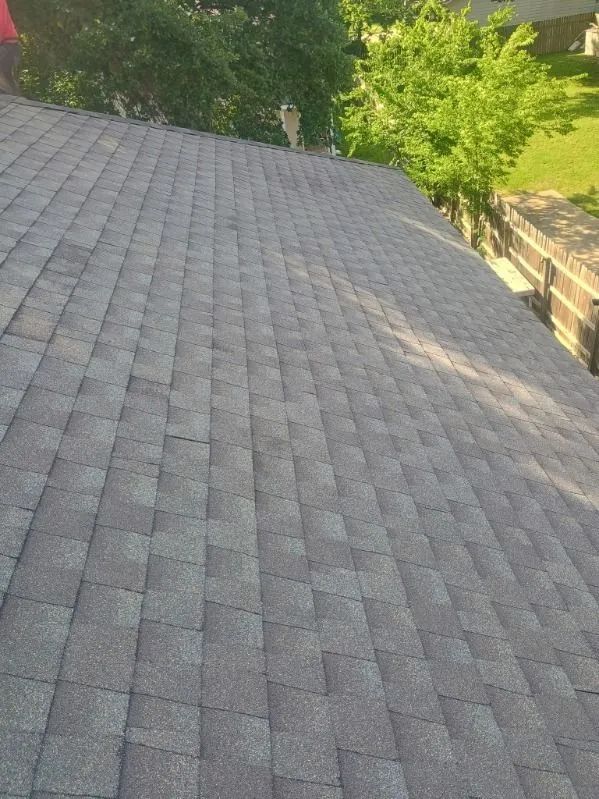
Hail sounds like gravel dumped on your roof from a truck bed, loud enough that you can time the gusts between hits. Then it stops, the sun comes back out within the hour, and your roof looks fine. That gap between what a storm sounds like and what it actually leaves behind is where hail damage tends to hide.
What to Look For From the Ground
Start outside, before you assume the roof came through fine. Granule loss is usually the clearest tell. Check the gutters and the base of the downspouts for a gritty buildup that looks like coarse sand. That's the protective coating knocked loose from the shingles on impact, and it means the asphalt underneath is more exposed to sun and moisture than it was the day before the storm. Walk the perimeter of the house next and look at anything softer than the roofing material itself, like aluminum vent caps, chimney flashing, gutters, and downspouts. Hail dents metal readily, and a scatter of small dings across those surfaces is one of the more reliable outdoor signs that the shingles above took a comparable beating even if they don't show it as clearly.
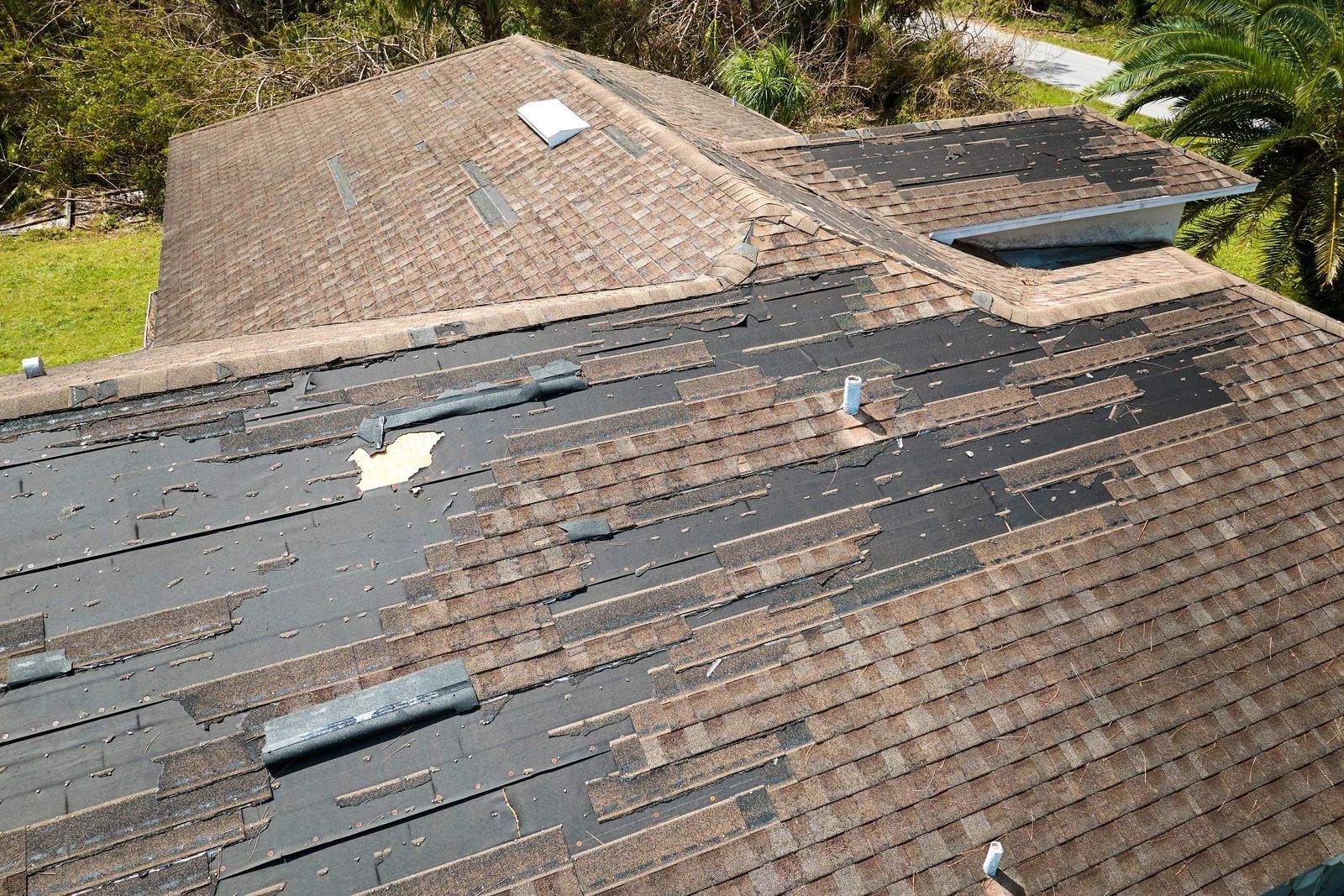
Cracked, torn, or missing shingles are the obvious cases, and homeowners usually catch those fast. Less obvious damage shows up in the smaller details. Window screens with fresh tears, dented gutter guards, loosened siding panels, or a scattering of leaves and small branches knocked down by hail rather than wind all point the same direction. Skylights deserve a look too, since a stress crack in the glass or plastic dome is easy to miss from a normal sightline but lets water in just as readily as a compromised shingle.
TIP: Do this walk-around the same day a hailstorm passes if you can, and take photos as you go. Granule buildup washes out of gutters with the next hard rain, so a same-day look gives you a clearer picture of what the storm actually did before later weather muddies the evidence.
Any area where the roof plane dips, sags, or feels spongy underfoot is not a shingle problem. That is a decking problem, and it means moisture has been sitting on the structural layer long enough to cause rot. A repair over compromised decking will not hold. The deck has to be replaced before anything else gets installed over it.
The Damage That Doesn't Show From the Yard
A shingle can pass a ground inspection and still be compromised. Hail bruises work something like a bruise on skin. The surface looks close to normal, sometimes with only a faint discoloration, while the impact fractures the fiberglass mat or asphalt layer underneath. Press gently on a suspect spot and a bruised shingle often feels soft or slightly spongy compared to the shingles around it, a difference no one can see from fifteen feet below on the ground.
The Insurance Institute for Business & Home Safety runs a hail research program that has looked specifically at how repeated small-hail impacts affect asphalt shingles over time, since dents that look cosmetic on day one keep influencing how the material weathers years down the road. Their testing backs up what roofing crews see constantly in the field: a roof that looks intact right after a storm can still be shedding granules and losing weather resistance months later, all traceable to hits that never cracked or tore anything on the surface.
Why Small Hail Damage Turns Into Bigger Problems Here
Houston's climate doesn't do a bruised shingle any favors. A fractured mat that might sit stable for years in a cooler, drier region gets pushed along faster here, where summer roof surface temperatures regularly climb well past 150 degrees and humidity keeps moisture sitting against the roofline longer between rain events. That combination softens asphalt and speeds up the breakdown of a spot that's already weaker than the shingles around it. What started as a hail bruise can turn into a granule-bare patch, and eventually a leak path, inside a single storm season instead of stretching out over several.
Timing matters after a
hailstorm here in a way it doesn't in a drier climate. A roof that could reasonably wait a few months for a full evaluation somewhere else doesn't get the same grace period on the Gulf Coast. The next heavy rain or the next stretch of afternoon heat is rarely more than a few days out, whether the storm rolled through Pasadena, Cypress, or further out toward Conroe and Tomball.
How Big Does Hail Have to Be to Cause Real Damage
The National Weather Service sizes hail using everyday comparisons, and the threshold for a severe thunderstorm warning is one inch in diameter, about quarter-sized. Quarter-size hail and smaller can still bruise shingles and dent soft metals, even though it rarely looks dramatic while it's falling. Golf ball-size hail, an inch and three-quarters, is where cracked or punctured shingles and dented siding start showing up consistently, and anything larger tends to leave damage that's obvious without a close look.
That smaller end of the scale is exactly what gets underestimated. A homeowner who watches quarter-size hail bounce off the driveway and figures the roof is fine is often looking at the same size hail that IBHS's research has tied to long-term shingle wear. Small doesn't mean harmless. It just means the damage takes longer to announce itself.
WARNING: Skip the ladder if you're not trained for roof work, especially right after a storm. Wet or granule-stripped shingles lose traction fast, and a roof that took hail damage can have soft or unstable spots that aren't obvious until you're standing on them.
When a Professional Inspection Actually Tells You Something Useful
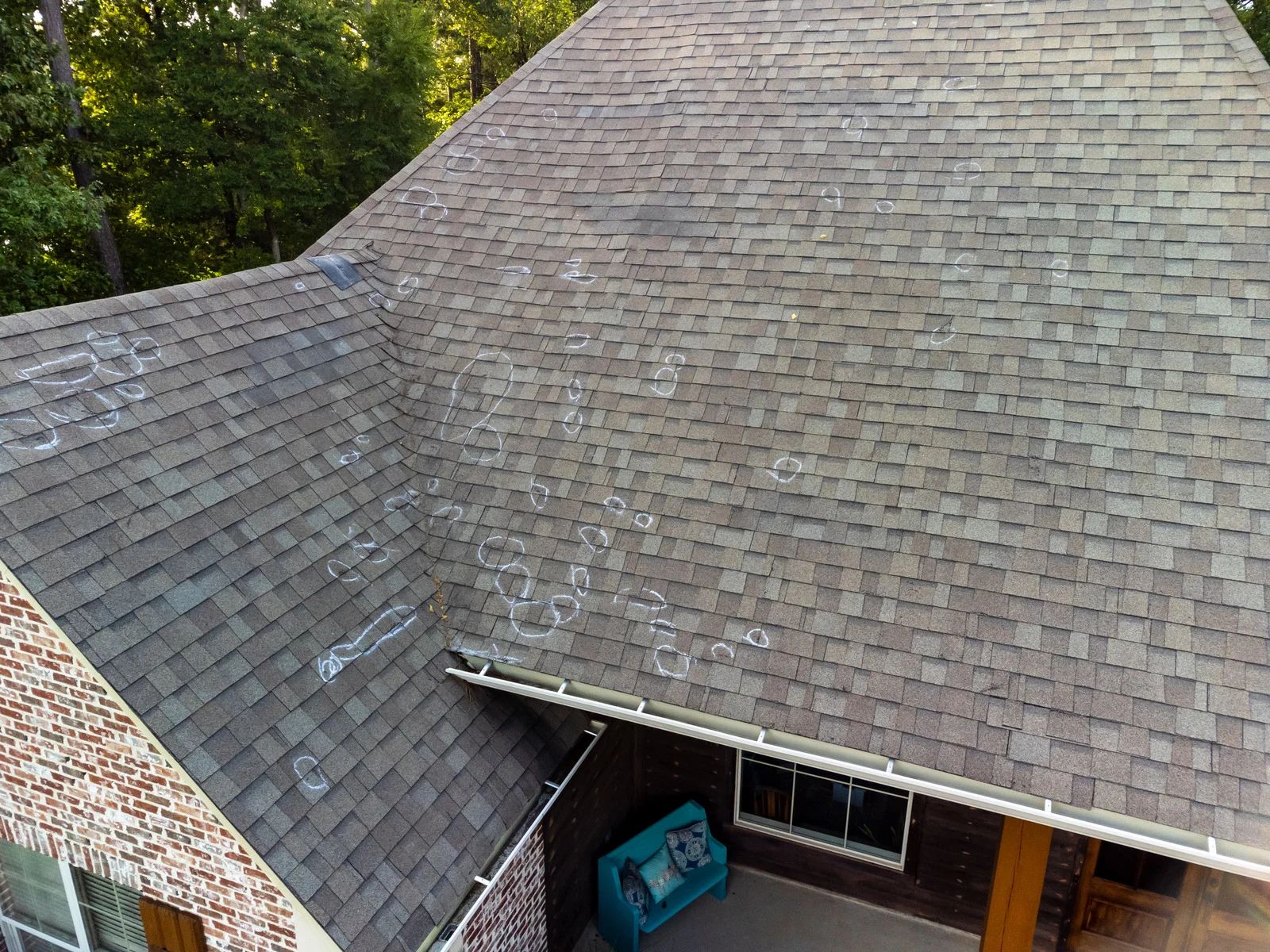
A trained inspector covers ground a homeowner's walkaround can't. That includes physically walking each roof plane and checking suspect shingles by hand rather than relying on what's visible from below, since bruising often only reveals itself under light pressure. Many inspectors also chalk-test suspected impact points, marking soft spots so the pattern of damage across the roof becomes easier to see and document. An attic check matters too, because early moisture from a hail-cracked shingle can show up as a damp insulation patch well before it works through to a ceiling stain.
That inspection is also what separates cosmetic marks from damage that actually affects performance. Not every hail-marked roof needs full replacement. Sometimes the pattern is limited enough that repairs to a specific slope, or a handful of shingles, restore the roof's weather resistance without the scope of tearing off the whole system. The only way to know which situation you're dealing with is getting eyes on the roof that know the difference between a scuff and a fracture.
Frequently Asked Questions
How long after a hailstorm does hail damage show up on a roof?
Some signs, like granule loss in the gutters or dented vent caps, are visible the same day. Others, like a bruised shingle mat breaking down into a leak, can take months to surface, especially in Houston's heat.
Can hail damage a roof without leaving any visible dents or cracks?
Yes. A bruise fractures the mat underneath the shingle surface, and the shingle can look almost normal from the ground while internal damage keeps spreading with every hot, humid stretch that follows.
Does hail damage always mean the roof needs full replacement?
No. Many hail-damaged roofs only need targeted repairs to specific slopes or shingles. A professional inspection determines whether the damage is limited or widespread enough to justify a larger project.
What size hail actually causes roof damage?
Quarter-size hail, about one inch across, is the National Weather Service's threshold for a severe thunderstorm warning, and hail at or above that size can bruise shingles and dent soft metal components.
How can I tell hail damage apart from normal shingle wear?
Hail damage usually shows a random, scattered pattern, with dents in soft metal components matching a specific storm's timing. Normal wear is more uniform and gradual, without the metal denting hail leaves behind.
Is it safe to inspect my own roof for hail damage?
A ground-level look with binoculars is safe right after a storm. Getting on the roof is different. Wet or hail-stripped shingles lose traction fast, and a trained inspector checks for soft spots more safely.
A Quiet Roof Isn't Always An Undamaged One
The shingles that cost homeowners the most rarely announce themselves right after a storm. A bruised mat can sit fractured underneath a surface that still looks intact, waiting for another humid stretch or a heavy rain to turn a hairline crack into an actual leak. Checking gutters for granule loss, watching for dented vent caps, and getting a trained eye on suspect shingles all matter more than a quick glance from the driveway ever could.
Sunlite Exteriors
has spent 45
years reading those quiet signs on roofs across Houston, TX, where heat and humidity turn minor hail bruising into real damage faster than almost anywhere else. That experience is what separates a roof that only needs a few targeted repairs from one that's further along than it looks. A roof that survived the storm without visible damage still deserves a second look before the next season puts it to the test.